

Meetings with plants in winter: bloody dock
Bramble & Briar 161

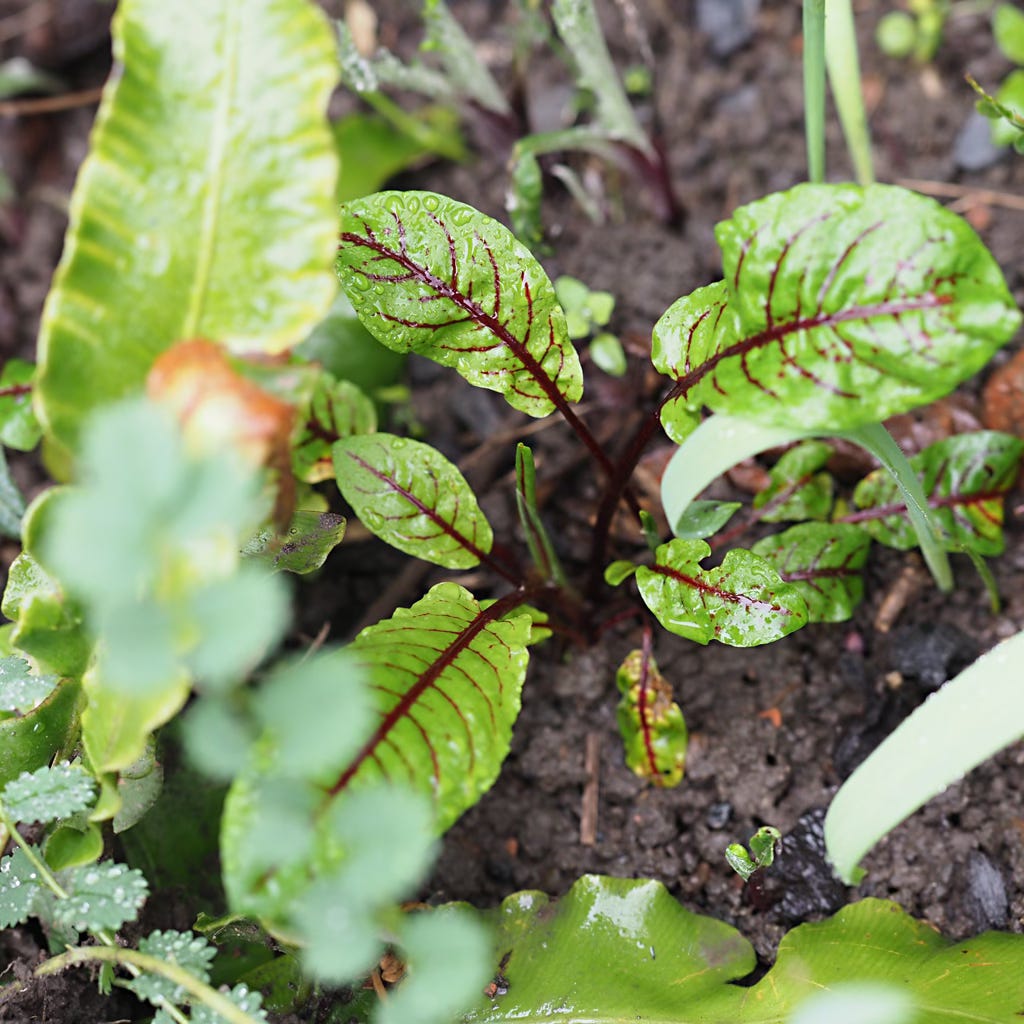
“Bloody dock!”, mutters the frustrated gardener, failing once more to extract the offending weed cleanly from the ground and snapping the long tap root just below the surface. We’ve probably all done it. And yet that familiar plant is not – not quite – what we’re meeting today.
I can give you the arguments in support of botanical Latin. I could tell you that while half of it isn’t even Latin, the system of Linnean binomial nomenclature is still universally useful, if not exactly fun (with the odd puerile exception – looking at you, Rubus cockburnianus). Give me a common name any day, and I’ll swap you perceived accuracy for folkloric charm with a little earthy humour thrown in. That’s a clear win in my book. In the case of bloody dock, we have something both descriptive and pleasingly reminiscent of what at least half of the gardeners you know might well exclaim upon finding this plant’s wild relative in their borders.
Since I’ve been aware of it, I’ve known Rumex sanguineus as red-veined sorrel, which is equally valuable as descriptive name, if rather more boring. And for those wondering about the precise difference between dock and sorrel, it purely comes down to size – both are members of the genus Rumex, and while docks are invariably considered weeds (or wildflowers for those of us with discernment, taste, and the patience to wait for the right soil conditions to pull them out of the ground, whole, when they threaten to get too numerous), sorrels are smaller, and invariably cultivated for the plate, to which they bring a very slight crunch and a notable, lemony whiz (the latter due to relatively high concentrations of oxalic acid).
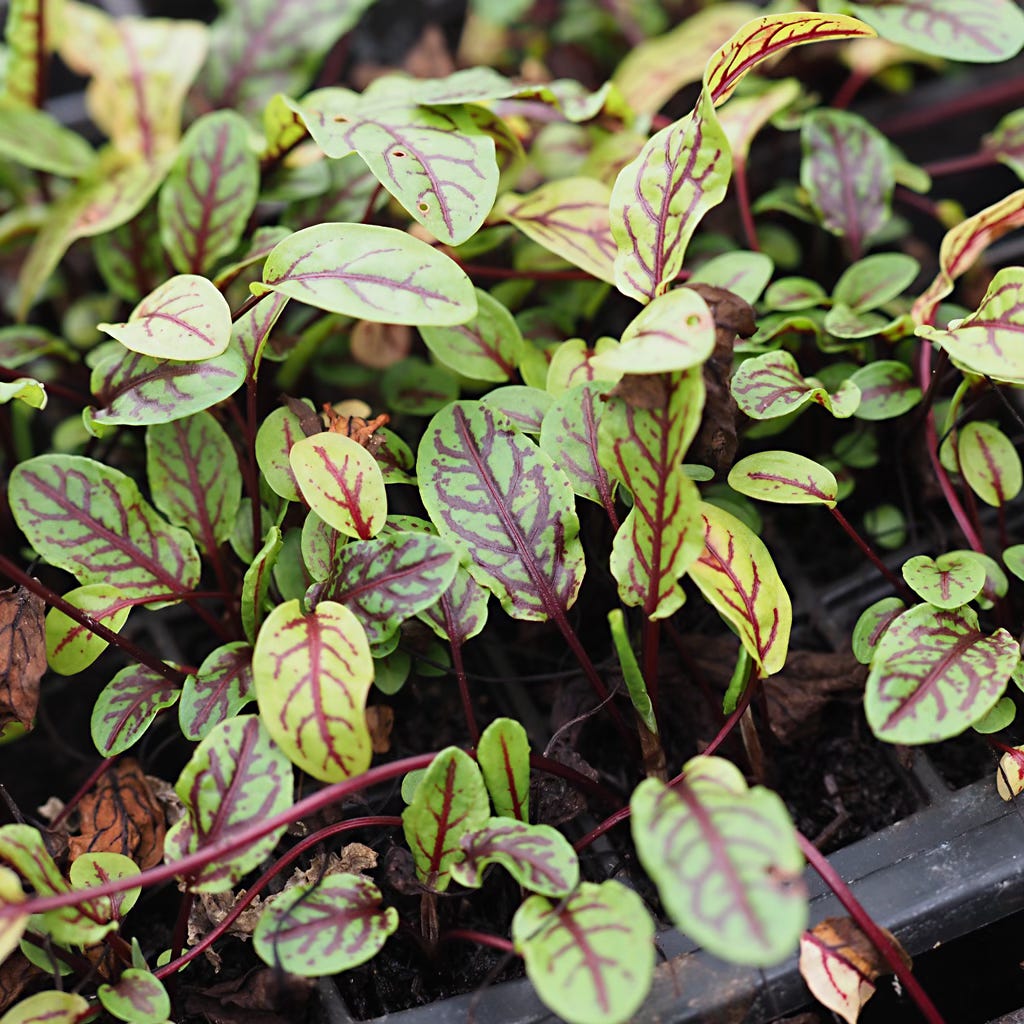
This particular sorrel falls firmly in the category of an edible that’s just as nice to look at as to eat (and yes, I’m avoiding the ghastly portmanteau term which, for some reason, makes me momentarily livid whenever I encounter it). Bright green, spoony to spear-shaped leaves1 with, as you might imagine from the name, beetroot-red veins and stems. It’s a low growing wonder, a cut-and-come-again delight that knits together beautifully in a nommable ground cover tapestry – for the potager, kitchen garden, or anywhere you would care to employ such carpeting – with alpine strawberries and salad burnet, and while perennial, here it’s also behaving in a reliably evergreen fashion. Leave it to mature and it will grow to about 60cm in height, the leaves toughening and becoming increasingly bitter as it nears flowering, but even then, it’s still a beauty.
Bloody dock, though. Actually, dock is one of my favourite garden plants. Must do a post on that, too.
in case you missed it…
That’s ‘spatulate to lanceolate’, for the botanical pedants out there…
So the true French sorrel I grow for soups and such and the red veined variety more for its beauty?