

Meetings with plants: firethorn
Bramble & Briar #179

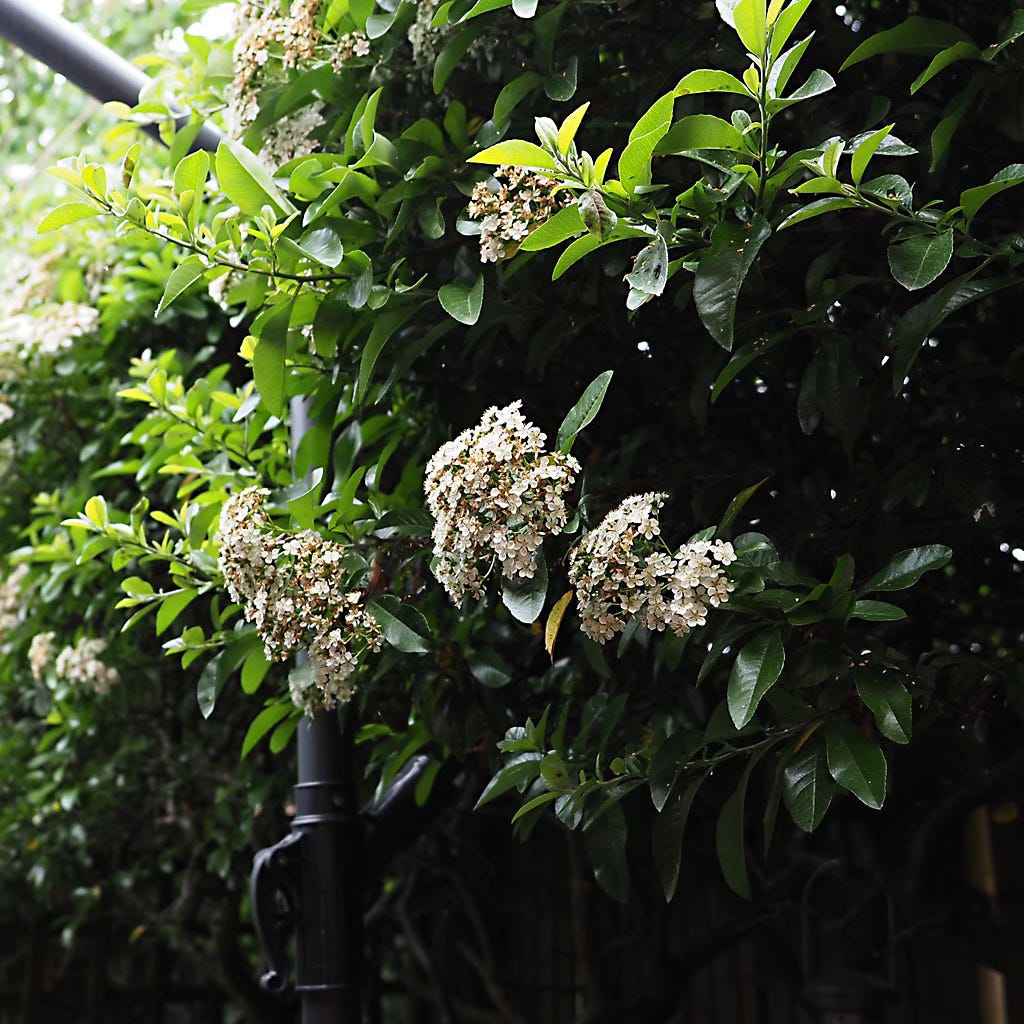
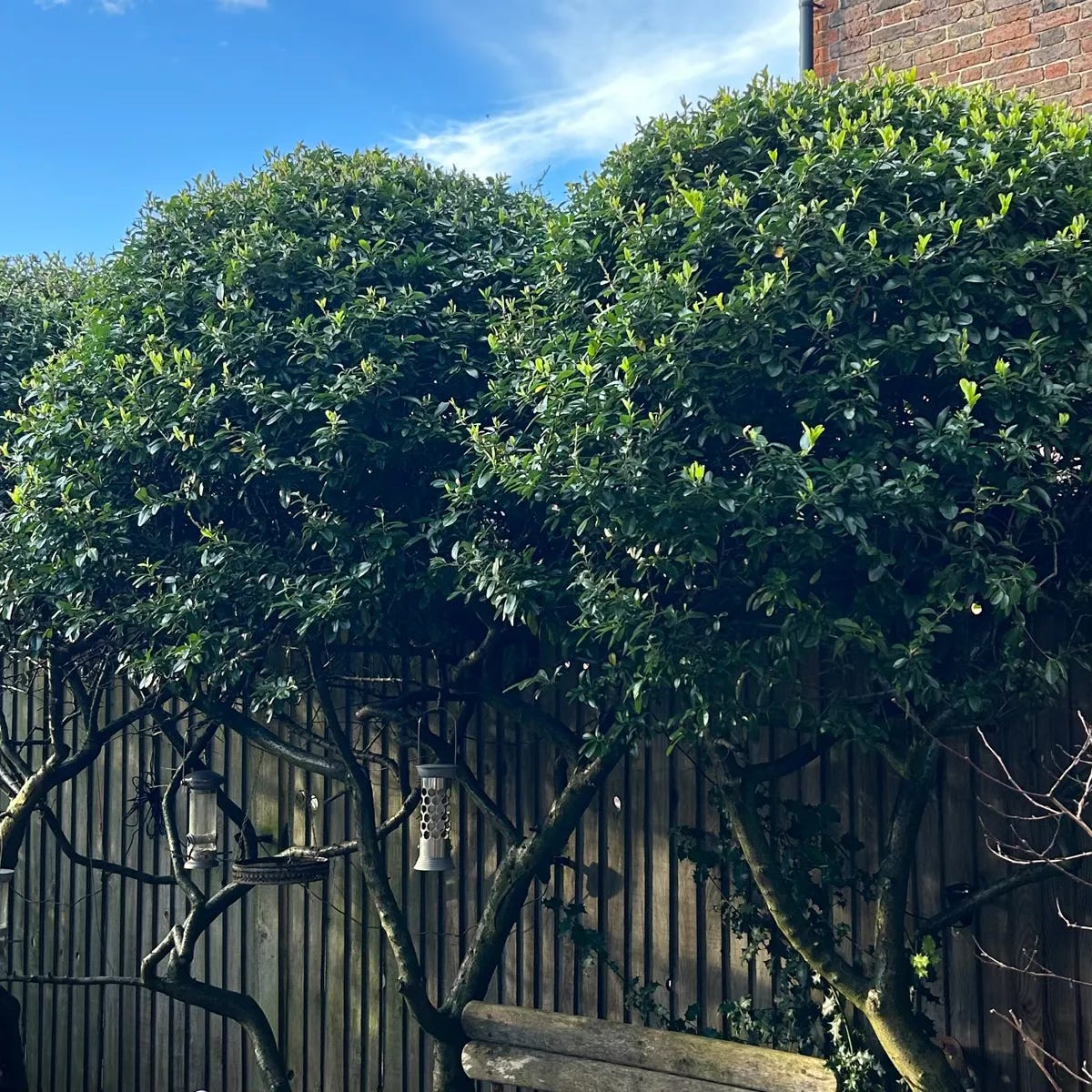
The firethorn was here before we were, and that’s not something you can say about many of the plants in our garden. Three lofty shrubs – I keep them at around 9ft/2.75m tall, but they’d happily grow much taller, and do, given half a chance. Due to their height and their position on the north side of the little courtyard, looking directly into the kitchen window, they can feel both sentry-like and slightly proprietorial, looking down upon us to make sure we’re taking care of their domain.
We get along just fine, barring the odd scrape from the fearsome thorns. The pyracantha (litteraly fire thorn) boasts yer actual thorns, unlike the rose which, contrary to popular belief, has not thorns but ‘prickles’ that grow out of the bark. These wicked spikes are modified stems – glove defeating, sharp and typically a good four to five centimetres long. For some absurd reason, Nell (a spaniel who will eat anything if it stays still for long enough) loves nothing better than to crunch bits of evilly-spined twig that she finds in the prodigious leaf litter at the foot of the plants. I think she has a fondness for this spot, since she spent her formative weeks lying there, happily ripping out all the epimediums, vinca, pachysandra and ferns that I felt so pleased with myself for having gotten to grow happily in the dry shade. I’ve not seen the point of replanting them, though now both dogs are out of their super destructive puppy phase, maybe I should have another go.
Having realised we could reclaim a good metre of space for ourselves from the tangle of overgrown evergreen that met us outside the backdoor when we moved in, I asked the firethorn for permission to treat it as pleached hedge, and they seemed happy to oblige. After a few more years, this transitioned into something more defined, and the present arrangement emerged. Quite how I’ve managed to get four immense green balls perched on only three stems is still something of a mystery, but you don’t argue when a shrub tells you how it wants to be shaped, and it works for us.
I mentioned the leaf litter. Some evergreens – holly for example, or sarcococca – jealously guard their foliage. The firethorn couldn’t hold on to theirs if it tried. There’s a prodigious turnover of the greenstuff, leading to an almost constant crunchy brown carpet below, which is less of a problem that it sounds. Just think of all the critters making it their home. From time to time I’ll rake it up and move it on. It’s never gone for long.
Larger critters either live or, I suspect, hang out by day in the top growth, and not a single hour passes from dawn to dusk unaccompanied by the incessant chirping and playfighting of house sparrows. Occasionally a robin or a blue tit might flutter into the courtyard, one of the jackdaws could descend briefly from the chimney pots, or a fat wood pigeon on an opportunistic recce, but we’ve learned that this space is widely accepted to be sparrow territory.
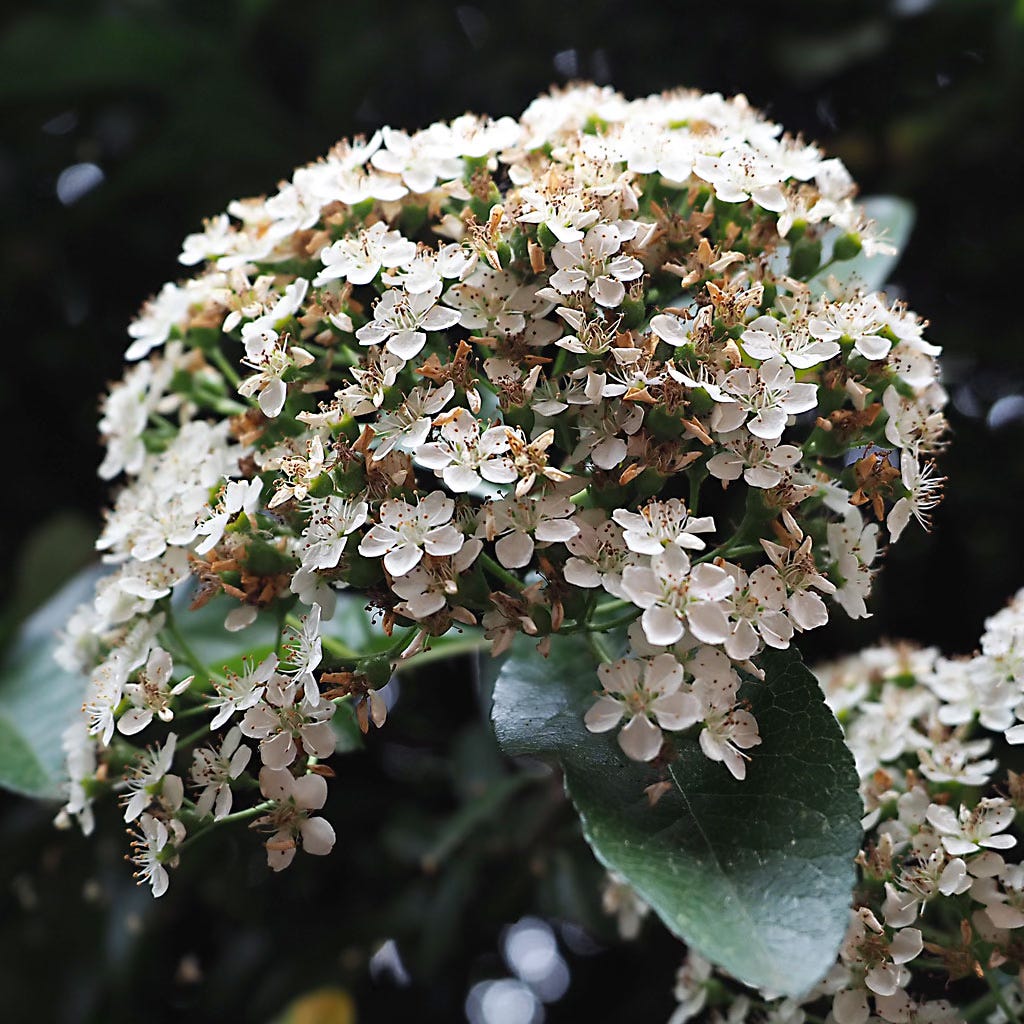
The eponymous thorns we’ve covered, but the first part of the firethorn’s name comes from the colour of its berries, variously yellow, red, or, in this case, orange. We don’t get a lot, almost certainly owing to the flowers being regularly snipped off by the regular clipping. Were the plants in a brighter spot, they’d probably bloom more prolifically, but for much of the day our house is between the firethorn and the sun. This year – when everything is early, or confused, or both, there are flowers aplenty. Though I’m also getting that itch when those few bits of the garden that I intend to be tightly controlled grow too far beyond their allotted form. Rumour has it there’s rain next week, and if I clip before summer rain, I’ll be clipping again in short measure. Maybe I’ll leave it a fortnight or so.
Would I plant it? I have a habit of planting spiky rose relatives – not the kind of thing you want to get in your foot. If I’m not planting blackthorn or hawthorn, the garden is serving up wild damsons or pyracantha. I’m not sure I’ll ever be a barefoot gardener – it just wouldn’t be safe. And that being the case, the firethorn stays – for its value to the creatures with whom we share this space, as well as for the character it brings to our days – and when the time comes to move to another house, it will doubtless be part of our lives there, too. We just know each other too well now not to make a garden together.
in case you missed it…